Are you tired of guessing which pots and pans work with your induction cooktop? You’re not alone.
Choosing the right cookware for your induction hob can be confusing, but it doesn’t have to be. With the right knowledge, you can unlock the full potential of your cooktop and elevate your cooking experience. Imagine whipping up meals faster and more efficiently, without the frustration of incompatible cookware.
This guide is here to simplify the process for you. Dive in to discover which cookware materials are perfect for your induction cooktop, ensuring your next culinary adventure is seamless and enjoyable.

Credit: www.nuwavenow.com
Induction Cooktop Basics
Induction cooktops are a modern marvel in the kitchen. Unlike traditional stoves, they use magnetic fields to heat pots and pans directly. This method is efficient and precise, offering a clean and safe cooking experience. But not all cookware is suitable for induction cooking. Understanding the basics can help you make the right choices.
How Induction Cooking Works
Induction cooktops generate heat using electromagnetic fields. These fields interact with ferrous metal cookware. The cookware itself becomes the heat source. This ensures rapid and even heating of food. Only pots made of magnetic materials work. Examples include cast iron and some stainless steel.
Benefits Of Induction Cooktops
Induction cooktops offer several advantages. They heat up faster than gas or electric stoves. Energy efficiency is another key benefit. Less energy is wasted in the cooking process. Safety is improved since only the pan heats up. The cooktop remains cool to the touch. Induction cooktops are also easy to clean. Spills do not burn onto the surface.

Credit: food52.com
Essential Cookware Materials
Choosing the right cookware for your induction cooktop can make all the difference in your cooking experience. It’s not just about style or brand; it’s about the material’s ability to conduct heat efficiently. But what makes a piece of cookware suitable for induction cooking? Let’s delve into the essential materials that you need to consider.
Magnetic Properties Explained
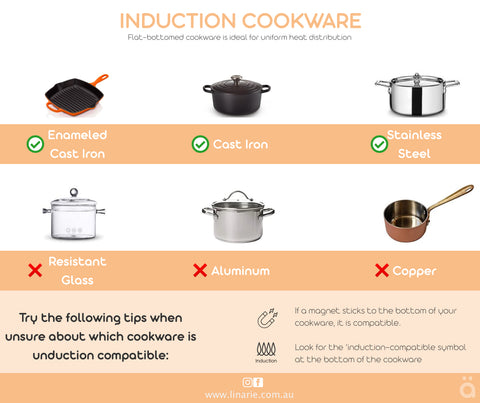
Induction cooktops work by creating a magnetic field that directly heats the cookware. This means your pots and pans must have magnetic properties to function. Simply put, if a magnet sticks to the base of your cookware, it’s likely suitable for induction use.
Have you ever held a magnet to your favorite frying pan only to watch it slide off without a hint of attraction? If so, it’s time to reassess your cookware collection. A magnetic base is non-negotiable if you want to harness the full power of induction cooking.
Common Induction-friendly Materials
- Cast Iron:The heavy-duty nature of cast iron makes it a perfect match for induction cooktops. Its magnetic properties ensure even heating, but remember to handle it with care to avoid scratching your cooktop.
- Stainless Steel:Not all stainless steel is created equal, so ensure it has a magnetic base. This material is durable and often comes with an appealing shiny finish that complements your kitchen aesthetics.
- Enamel-Coated Iron:If you love the colorful appeal of enamel cookware, you’re in luck. It’s not only induction-friendly but also brings a splash of color to your culinary creations.
Do you have any of these materials in your kitchen arsenal? If not, it might be time to invest in a few pieces to make the most of your induction cooktop. The efficiency and precision they offer can transform your cooking routine.
Compatible Cookware Types
Induction cooktops are gaining popularity for their efficiency and safety. Choosing the right cookware is essential for optimal performance. Not all pots and pans work on induction surfaces. Compatible cookware types include materials that allow the magnetic field to generate heat. Below, explore the types of cookware that work well on induction cooktops.
Cast Iron Cookware
Cast iron is a top choice for induction cooktops. It has excellent heat retention. Its magnetic properties make it ideal for induction cooking. Cast iron cookware is durable and can last many years. It is perfect for slow cooking and searing meats. Just ensure your cookware is flat-bottomed for stability.
Stainless Steel Options
Stainless steel is another reliable option. It is versatile and easy to clean. Not all stainless steel is induction-ready. Look for those with magnetic bases. These are often labeled as induction-compatible. They provide even heating and are resistant to corrosion. Stainless steel pots and pans are a favorite in modern kitchens.
Enamel-coated Cookware
Enamel-coated cookware combines style and function. It usually comes with a cast iron or steel base. The enamel layer adds color and protection. This type is suitable for induction cooktops. It offers non-stick benefits and easy cleaning. Enamel-coated pots are ideal for everyday use and display.
Specialty Cookware Considerations
Induction cooktops require cookware with magnetic properties. Cast iron, stainless steel, and some nonstick pans work well. Avoid aluminum or copper unless they have a magnetic layer.
Cooking on an induction cooktop can be a game-changer in your kitchen. This sleek and efficient cooking method requires some specific considerations, especially when selecting the right cookware. Specialty cookware brings its own set of challenges and benefits. Understanding these can help you make the most out of your induction cooking experience. Let’s dive into some key considerations.Non-stick Pans On Induction
Non-stick pans are a staple in many kitchens due to their ease of use and quick clean-up. When using them on an induction cooktop, compatibility is crucial. Many non-stick pans now come with a magnetic base, making them induction-ready. However, not all non-stick coatings are created equal. High heat can damage some coatings, so it’s important to monitor your cooking temperature. Always check the manufacturer’s guidelines to ensure your non-stick pan is suitable for induction cooking. Have you ever wondered why some pans heat unevenly? Induction cooktops need flat and smooth bases to distribute heat properly. Ensuring your non-stick pan meets this requirement can enhance your cooking results.Copper Cookware Challenges
Copper cookware is renowned for its excellent heat conductivity. Yet, it poses a unique challenge for induction cooktops. Copper itself is not magnetic, which means it won’t work directly with induction. But don’t let this deter you if you’re a fan of copper’s aesthetic and performance. Some copper cookware now comes with a stainless steel or magnetic base. This adaptation allows it to work on induction cooktops while maintaining copper’s superior heat control. It’s essential to check if your copper cookware has this feature. If not, investing in a conversion disk is another option. This disk acts as a magnetic interface between the cooktop and the copper pan, allowing you to enjoy the benefits of both. Would you consider this solution to keep using your beloved copper pots? Choosing the right cookware enhances not only your cooking efficiency but also your enjoyment in the kitchen. By understanding these specialty cookware considerations, you can make informed decisions that fit your cooking style and needs. What are your favorite types of cookware for induction cooking?Testing Cookware Compatibility
Testing cookware compatibility with an induction cooktop is essential. Choose pots and pans with a magnetic bottom. Materials like cast iron or stainless steel work well.
Testing cookware compatibility with your induction cooktop is crucial. Not all pots and pans work well on these modern stoves. Some simple tests and checks can save time and frustration. Let’s explore how to ensure your cookware is ready for induction cooking.Simple Magnet Test
This test is quick and easy. Hold a magnet to the bottom of your cookware. If the magnet sticks firmly, it is compatible with your induction cooktop. This is because induction cooking relies on magnetic fields. The material must be ferrous, like iron or certain stainless steels.Manufacturer Guidelines
Always check the manufacturer’s instructions. These guidelines provide clear information on compatibility. They often include symbols or labels. These symbols indicate whether the cookware is suitable for induction use. Reading the manual can prevent damage and ensure safety. Always follow the recommendations for the best results.Tips For Optimal Cooking Experience
Cooking on an induction cooktop can be a delightful experience, but getting the most out of it requires some know-how. Selecting the right cookware is just the beginning. Implementing smart cooking techniques and taking good care of your pots and pans can significantly enhance your culinary adventures. Let’s dive into some tips that can elevate your cooking skills on induction surfaces.
Heat Distribution Techniques
Induction cooktops heat pots and pans directly, offering fast and efficient energy transfer. To maximize heat distribution, choose cookware with a flat, smooth bottom. This ensures even contact with the cooktop, reducing hot spots. Consider using cookware with a multi-layered base, such as those featuring aluminum or copper cores, to further enhance even heating.
How you arrange ingredients also impacts heat distribution. Spread food evenly across the pan rather than piling it in the center. This simple adjustment can prevent uneven cooking and improve the overall flavor of your dish.
Maintenance And Care
Keeping your induction cookware in top condition is crucial for optimal performance. Always clean your pots and pans after each use to prevent residue build-up. Mild dish soap and a soft sponge can do wonders for maintaining their shine and functionality.
Regularly check for scratches or dents on the bottom of your cookware. Such imperfections can disrupt the magnetic field needed for induction cooking. If you notice any damage, it might be time to consider a replacement. A little attention to care can go a long way in preserving the longevity of your cookware.
Future Trends In Induction Cookware
Induction cooktops demand cookware with magnetic bases. Stainless steel, cast iron, and some non-stick pans work well. Future trends show a rise in eco-friendly materials and advanced designs for efficient heating.
Induction cooktops are rapidly becoming a staple in modern kitchens, thanks to their efficiency and precision. As they gain popularity, the demand for compatible cookware is on the rise. The future of induction cookware is not just about compatibility, but also innovation and sustainability. What exciting changes can you expect to see?Innovative Material Developments
The next generation of induction cookware is being crafted with cutting-edge materials that improve performance and durability. Manufacturers are experimenting with composite materials that distribute heat more evenly. Imagine cookware that heats your food uniformly, eliminating those annoying cold spots. Technological advancements are also leading to lighter cookware without sacrificing strength. This means you can enjoy the benefits of induction cooking without the heavy lifting. Who wouldn’t want to make cooking a bit easier on the arms?Sustainable Cookware Options
In a world increasingly conscious of environmental impact, sustainable cookware is gaining traction. Cookware made from recycled materials is becoming more common, reducing waste and conserving resources. It’s a great feeling knowing your pots and pans are eco-friendly. Brands are also focusing on producing non-toxic, long-lasting cookware. This not only benefits the planet but also ensures safer cooking for you and your family. Choosing sustainable options can turn your kitchen into a more environmentally friendly space. As these trends evolve, what are you most excited to try in your kitchen?
Credit: www.omichef.com
Frequently Asked Questions
What Types Of Cookware Are Induction-compatible?
Induction-compatible cookware must be magnetic, typically made of cast iron or stainless steel. If a magnet sticks to the bottom, it should work on an induction cooktop. Non-magnetic cookware, like aluminum or glass, won’t work unless they have a magnetic base.
Can Non-stick Pans Be Used On Induction Stoves?
Yes, non-stick pans with a magnetic base can be used on induction stoves. Ensure the pan’s base is flat and magnetic to function properly. Always check the manufacturer’s instructions to confirm compatibility with induction cooktops.
Is Cast Iron Good For Induction Cooking?
Cast iron is excellent for induction cooking due to its magnetic properties. It provides even heat distribution, making it ideal for induction cooktops. However, its heavy nature may require careful handling to avoid scratching the cooktop surface.
Are All Stainless Steel Pans Induction-ready?
Not all stainless steel pans are induction-ready. Only those with a magnetic base are suitable. Check if a magnet sticks to the pan’s bottom. If it does, the pan is likely induction-compatible.
Conclusion
Choosing the right cookware for induction is vital. It ensures efficient cooking. Stainless steel and cast iron work best. They have magnetic properties. Check for compatibility symbols on cookware. This helps avoid mistakes. Flat-bottomed pans are ideal. They provide good contact with the cooktop.
Avoid glass and copper. They lack magnetic properties. Proper care extends cookware life. Clean them regularly. Store in a dry place. This prevents rust and damage. Understanding these basics enhances your cooking experience. Enjoy cooking with the right tools. It makes kitchen tasks easier and more enjoyable.