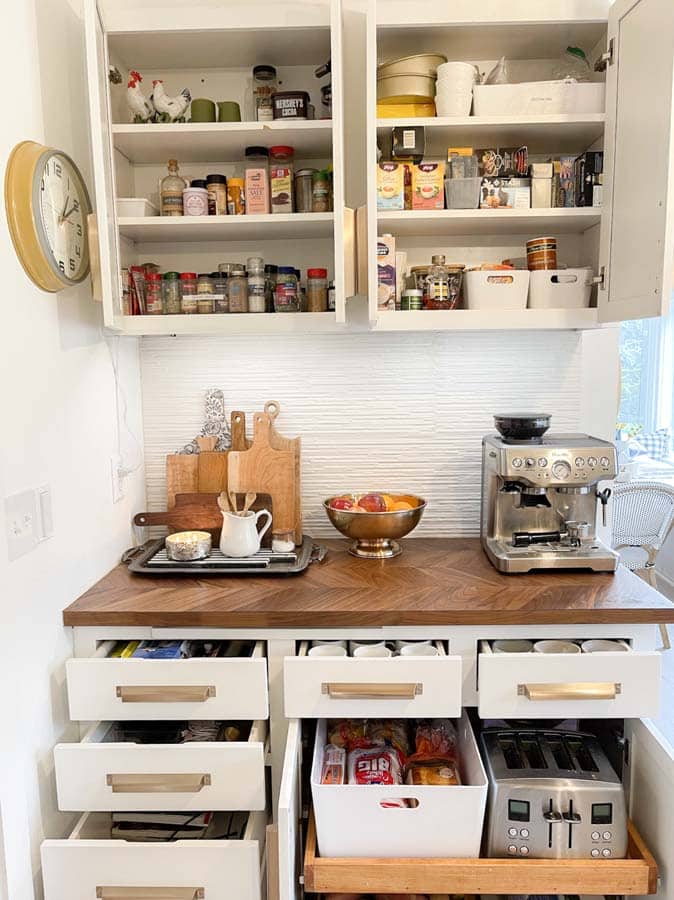
Imagine opening your kitchen cabinets and drawers and finding everything perfectly organized. No more frantic searches for the right lid or elusive spice jar.
Instead, you have a kitchen where everything is in its place, making cooking a breeze. You deserve a space that works for you, not against you. If clutter and chaos have taken over your cabinets and drawers, there’s a simple solution.
Let’s transform your kitchen into a streamlined paradise. By the end of this guide, you’ll know exactly how to organize your kitchen cabinets and drawers effectively. Get ready to reclaim your kitchen and enjoy the peace of mind that comes with a well-organized space. Your culinary adventures await!
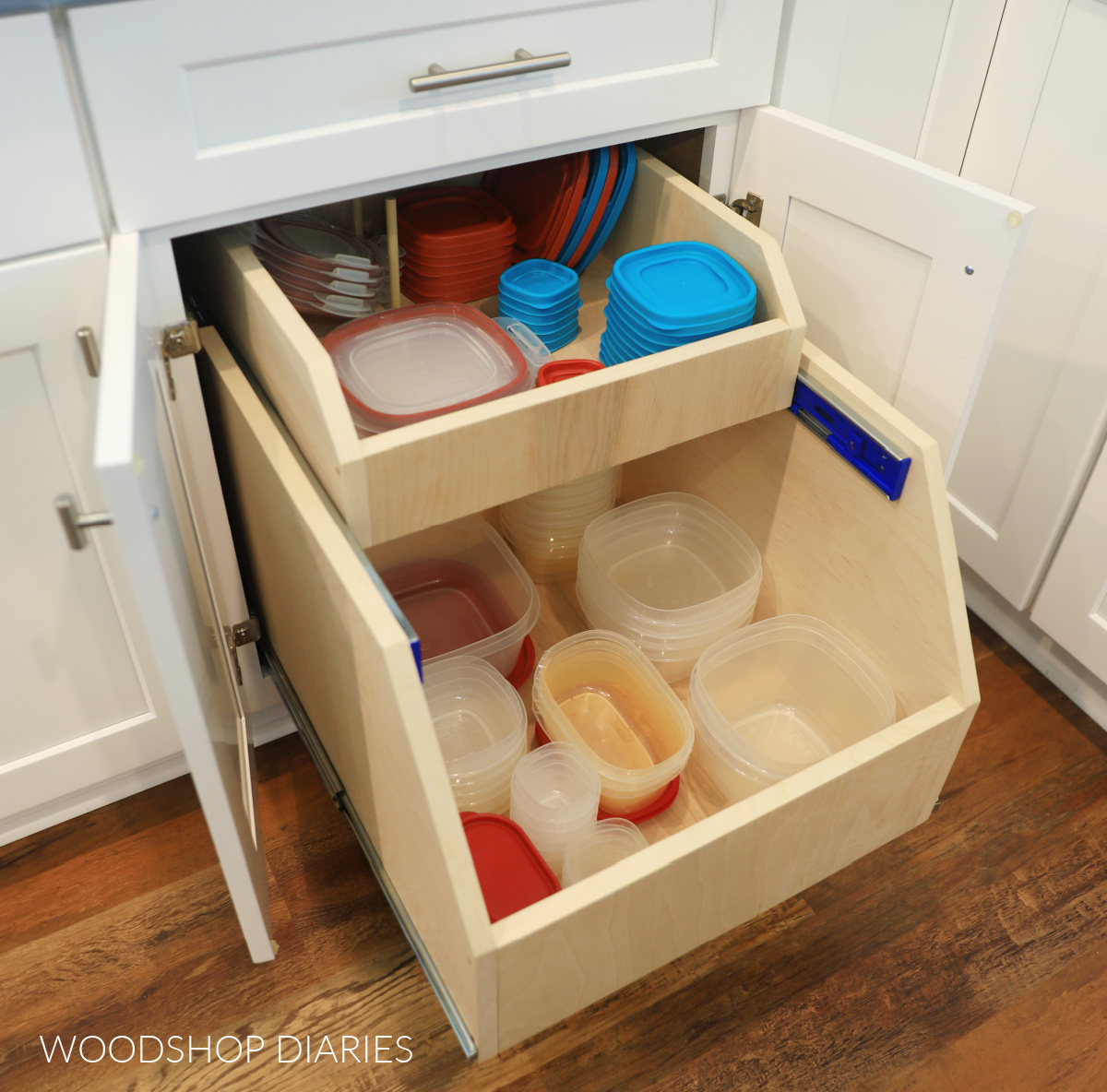
Credit: www.woodshopdiaries.com
Kitchen Layout Assessment
Assessing kitchen layout helps organize cabinets and drawers efficiently. Prioritize frequently used items for easy access. Group similar items together, utilizing dividers to maximize space.
Assessing your kitchen layout is the first step towards a well-organized and efficient space. A good layout ensures that your cabinets and drawers cater to your cooking habits, making meal preparation smoother and more enjoyable. Think about how often you struggle to find items or how cluttered your space feels. It’s time to transform chaos into order.Identifying Problem Areas
Start by examining your kitchen’s current state. Open each cabinet and drawer, noting where items tend to pile up or get misplaced. Are your pots and pans stacked in a precarious tower? Are spices scattered across various shelves? Identify these hotspots of disarray. This understanding will guide you in rearranging your space more effectively. Ask yourself: Which items do I frequently use, and are they easily accessible? Recognizing these problem areas is essential for crafting a functional kitchen.Space Utilization Strategies
Once you’ve pinpointed the clutter culprits, it’s time to rethink how you’re using your space. Consider vertical storage solutions for maximizing cabinet height. Use shelf risers to create additional layers, allowing you to stack items more efficiently. Drawer organizers can revolutionize how you store utensils and smaller kitchen gadgets. By compartmentalizing, you prevent items from becoming a jumbled mess. Think about frequently used items; keep them at eye level or within easy reach. Less-used items can be stored in higher or lower places. By strategically placing your kitchen essentials, you create an intuitive flow that simplifies your cooking process. Doesn’t it sound refreshing to have a kitchen that works with you, rather than against you?
Credit: www.youtube.com
Essential Tools And Supplies
Organizing kitchen cabinets and drawers can simplify daily tasks. Essential tools and supplies play a crucial role in this process. They help keep everything neat and accessible. Using the right products can transform cluttered spaces into functional areas.
Organizational Products
Organizational products are key to maintaining order. They include shelf dividers, drawer inserts, and spice racks. These items maximize space and prevent clutter. Shelf dividers can separate different items, making them easy to find. Drawer inserts keep utensils and gadgets organized. Spice racks display seasonings neatly, saving time during cooking.
Choosing The Right Containers
Choosing the right containers is essential for effective organization. Clear containers help identify contents quickly. Use them for storing grains, pasta, and snacks. Stackable containers save space in cabinets. They fit neatly and create a tidy look. Airtight containers keep food fresh and extend shelf life.
Consider sizes that fit your shelves and drawers. Ensure they are easy to open and close. This makes accessing ingredients fast and hassle-free.
Categorizing Kitchen Items
Organizing kitchen cabinets and drawers can feel overwhelming. A practical way to begin is by categorizing your kitchen items. This step helps you find items faster and make better use of your space. Let’s explore some effective strategies to categorize your kitchen essentials.
Grouping Similar Items
Start by grouping similar items together. Place all your baking tools in one section. Gather your cooking pots and pans nearby. This strategy makes cooking smoother and more efficient. It also reduces the time spent searching for tools. Use baskets or bins to keep smaller items tidy. Label these containers for quick identification. Clear containers let you see contents at a glance.
Seasonal And Occasional Use
Store seasonal items like holiday bakeware or special occasion dishes separately. Keep them in higher cabinets or in the back of a drawer. This frees up space for everyday items. Access them easily during special occasions without cluttering daily use areas. For items used less often, consider placing them on top shelves. This way, your frequently used items stay within reach.
Cabinet Organization Techniques
Your kitchen is the heart of your home, and having it organized can make meal preparation a breeze. The secret lies in mastering cabinet organization techniques that transform chaos into order. Whether you’re an avid cook or someone who enjoys occasional culinary adventures, optimizing your cabinet space can enhance your cooking experience.
Maximizing Shelf Space
Have you ever found yourself stacking items precariously, hoping they won’t fall every time you open the cabinet door? This is where maximizing shelf space becomes crucial. Start by adjusting shelf heights to accommodate taller items—many cabinets allow for such customization.
Consider using shelf risers or stackable organizers. These tools help you utilize vertical space efficiently, creating additional tiers for small jars or dishes. Think of them as your cabinet’s loft space, where everything has its own place.
Labels are another great ally. Clearly marked containers ensure that you can quickly find what you need without rummaging. This not only saves time but also keeps your kitchen looking tidy.
Vertical Storage Solutions
Vertical storage might just be the game-changer you’ve been looking for. Imagine your baking sheets and cutting boards standing like books on a shelf, instead of being buried under pots and pans. This simple change can free up significant space and make items more accessible.
Install tension rods or dividers within cabinets. These small additions can hold items upright and prevent them from sliding around. Suddenly, that cluttered cabinet becomes a well-ordered library of kitchen essentials.
Don’t overlook the back of cabinet doors. Mount hooks or small racks to store lids, measuring spoons, or even spice racks. This often-overlooked space can hold a surprising amount of items, keeping them within easy reach.
Have you tried any of these techniques? How have they transformed your kitchen organization journey? Let your cabinets be a reflection of your cooking style—efficient, organized, and ready for culinary exploration.
Drawer Arrangement Methods
Organize kitchen cabinets by grouping similar items together. Use dividers for utensils and stack pots with lids to save space. Label containers for easy access and maintain a clutter-free environment.
Organizing your kitchen cabinets and drawers can seem like a daunting task, but with the right methods, it can be a breeze. Drawer arrangement, in particular, is an essential part of keeping your kitchen functional and efficient. By focusing on how you arrange your drawers, you can enhance your cooking experience and save time. Let’s explore some practical drawer arrangement methods that can transform your kitchen space.Dividers And Inserts
Using dividers and inserts is a simple yet effective way to keep your drawers organized. They help separate items, making it easy to find what you need quickly. For instance, using a cutlery tray in your utensil drawer can keep forks, knives, and spoons in their own compartments. Consider adjustable dividers for larger drawers. These can be moved around to fit items of various sizes, from pots and lids to baking tools. You might find a drawer with neatly arranged tools inspires you to cook more often. Custom inserts can also be a game-changer. They allow you to tailor the drawer to your specific needs. Whether it’s spices, gadgets, or even baking sheets, there’s an insert for that.Efficient Use Of Drawer Space
Maximizing drawer space is key to an efficient kitchen. Start by placing frequently used items in top drawers, where they are easily accessible. Lesser-used items can find a place in lower drawers, freeing up space for essentials. Stacking items can also be useful. Use stackable containers for dry goods or spices to utilize vertical space. Just make sure items are still easy to reach and not buried under heavier items. Rethink how you store bulky items. Instead of cramming them into a drawer, consider vertical storage solutions. For example, standing pot lids upright can save space and prevent that dreaded clanging sound every time you open the drawer. Organizing your kitchen drawers with these methods can lead to more enjoyable and efficient cooking experiences. Which drawer will you tackle first?Labeling And Maintenance
Labeling and maintenance ensure easy access and organization in kitchen cabinets and drawers. Clear labels help identify items quickly. Regularly review and maintain order to avoid clutter and keep essentials within reach.
Organizing your kitchen cabinets and drawers can be a game-changer, transforming your cooking space into a more efficient and stress-free environment. One of the key elements in maintaining this organization is a good labeling system and regular maintenance. These practices ensure that everything is in its place and easy to find, saving you time and keeping your kitchen clutter-free.Creating A Labeling System
Labels act as a roadmap to your kitchen. They guide you to the right spot every time without fail. Start by categorizing your kitchen items: spices, baking supplies, canned goods, or utensils. Use clear, easy-to-read labels that are durable and resistant to wear and tear. Consider using a label maker for a professional look or chalkboard labels for a customizable and stylish approach. Color coding can also be a great visual cue, especially for families or shared kitchens. Think about what works best for your lifestyle. If you frequently rearrange items, opt for removable labels that allow flexibility. This little effort in setting up a system can significantly reduce the time spent searching for items.Regular Cleaning And Upkeep
Once everything is labeled, regular upkeep is essential. Set a monthly reminder to clean out expired food items and reorganize misplaced items. Wipe down shelves and drawers to keep your kitchen fresh and hygienic. Routine checks help you maintain an organized space. It prevents the accumulation of clutter and ensures that your kitchen remains functional. You might be surprised at how quickly things pile up if left unchecked. Ask yourself, is there a better way to organize these items? Sometimes, a small tweak can lead to better efficiency and ease of use. Keeping up with maintenance is about preserving your initial efforts and enjoying a clutter-free kitchen. Engaging in these practices can transform your kitchen from chaos to calm. With a little effort, you can create a space that supports your cooking habits, reduces stress, and impresses guests. How will you tackle your kitchen organization this week?Expert Tips For Small Kitchens
Organize kitchen cabinets by grouping similar items together for easy access. Use drawer dividers to separate utensils and keep them tidy. Store pots and pans in stackable racks to maximize space.
Organizing a small kitchen can feel challenging. Limited space requires smart solutions. Luckily, there are expert tips to optimize every corner. With creativity, even the tiniest kitchen can be functional and stylish. Use these practical tips to transform your space.Space-saving Hacks
Maximize vertical space by using shelves. Install them on walls to store items. Use hooks to hang utensils and mugs. This keeps counters clear. Stack pots and pans to save space. Use stackable containers for dry goods. They keep food fresh and organized. Invest in a magnetic knife strip. It frees up drawer space and keeps knives handy. Roll-out shelves in cabinets provide easy access. They prevent items from getting lost at the back.Multi-functional Furniture
Opt for furniture that serves more than one purpose. A drop-leaf table can be a dining area and prep space. Use stools that fit under counters. They save space and provide seating when needed. Consider a kitchen island with storage. It offers extra counter space and a place for pots and pans. Choose chairs or benches with hidden storage. They can hold linens or kitchen gadgets. Multi-functional furniture helps keep a small kitchen tidy and efficient.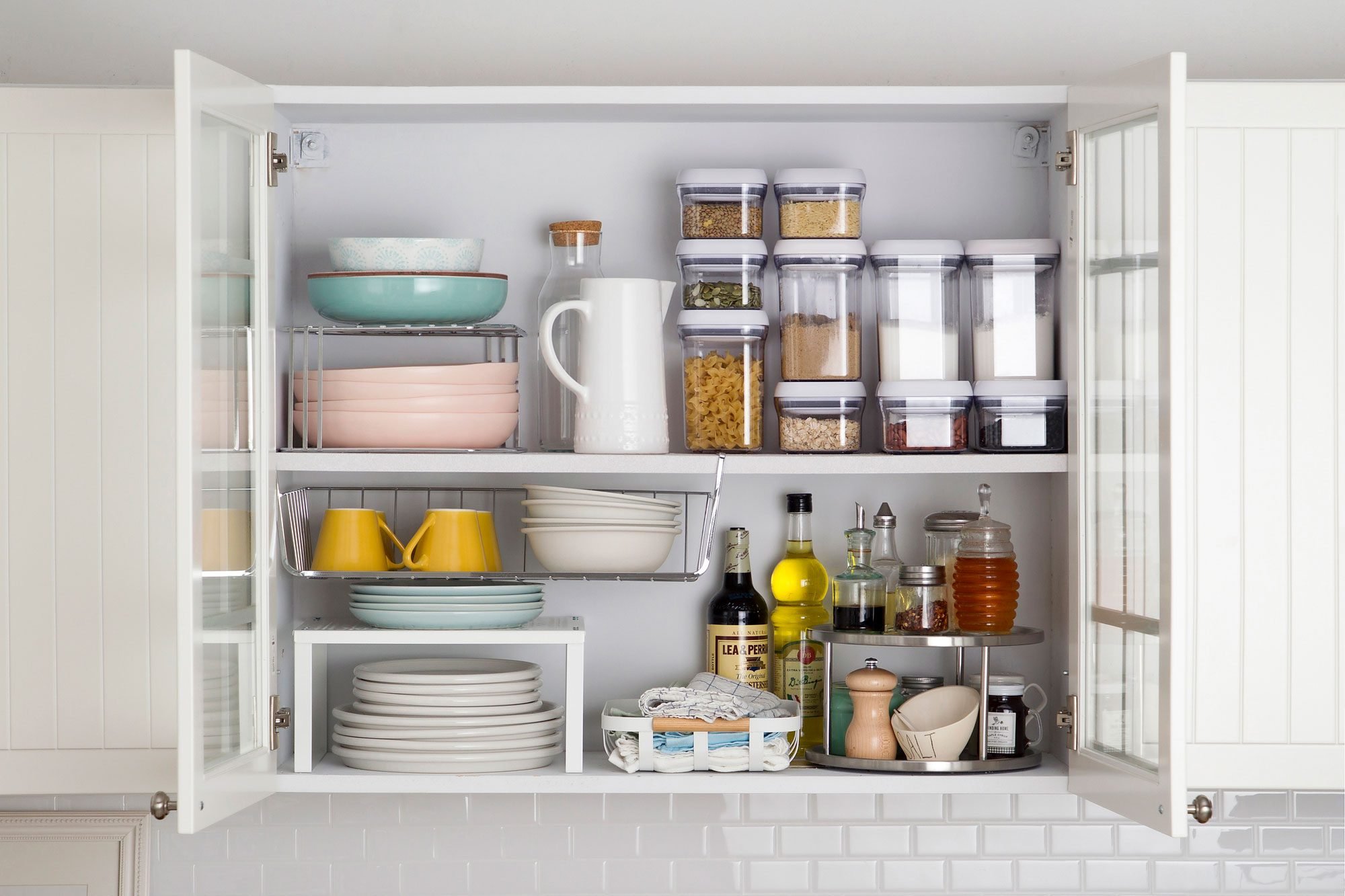
Credit: www.rd.com
Frequently Asked Questions
How Do I Start Organizing Kitchen Cabinets?
Begin by emptying all cabinets and drawers completely. Categorize items into groups like cookware, utensils, and pantry goods. Assess what you use regularly and prioritize those items. Consider donating or disposing of unused items. Use storage solutions like bins, shelves, and dividers for better organization.
What Are Effective Storage Solutions For Drawers?
Utilize drawer organizers to separate utensils, gadgets, and kitchen tools. Adjustable dividers can accommodate various item sizes. Consider vertical storage for larger utensils. Use labels for easy identification. Drawer liners can prevent slipping and protect surfaces. Regularly declutter to maintain organization.
How Can I Maximize Cabinet Space?
Install adjustable shelves to accommodate different item sizes. Use stacking solutions for pots and pans. Consider lazy Susans for corner cabinets. Utilize door-mounted racks for spices and condiments. Opt for clear containers to easily identify contents. Regularly reassess and remove items that are rarely used.
What’s The Best Way To Store Spices?
Organize spices by frequency of use and cooking style. Use tiered spice racks or drawer inserts for easy access. Consider magnetic spice jars on cabinet doors. Label each container clearly. Group similar spices together. Regularly check expiration dates and rotate stock to keep flavors fresh.
Conclusion
Organizing kitchen cabinets and drawers makes cooking easier. Start small. Focus on one area at a time. Use baskets for snacks. Utilize dividers for utensils. Label jars for spices. Stack pots to save space. Consider donating unused items. Regular cleaning helps maintain order.
Remember, a tidy kitchen saves time. It reduces stress. You find what you need quickly. Your kitchen becomes more enjoyable. A little effort goes a long way. Enjoy cooking in your well-organized space. Keep it simple. Stay consistent. Happy organizing!