Are you tired of rummaging through cluttered kitchen cabinets every time you cook? Do you feel overwhelmed by the disarray and chaos every time you reach for an ingredient?
You’re not alone! Disorganized food cabinets can turn cooking into a frustrating experience, but the good news is that with the right strategies, you can turn this around. Imagine opening your cabinets and finding everything neatly arranged, easy to access, and visually appealing.
This is not just a dream—it’s achievable! By following simple, effective steps, you can transform your kitchen cabinets into a functional and tidy space. Dive into this article to discover how you can simplify your life, save time, and even reduce stress by organizing your kitchen food cabinets efficiently. Your cooking experience is about to become much more enjoyable!
Assessing Cabinet Space
Assessing Cabinet Space Measure each shelf to know how much space is available. Group similar items together for easier access. Consider shelf height and depth for efficient storage solutions.
Assessing your kitchen cabinet space is crucial in setting up a functional and organized area. Whether you have a small kitchen or an expansive one, understanding your space can help you make the most out of it. You might be surprised at how a few simple adjustments can transform your kitchen into a more efficient workspace.Measuring Dimensions
Start by grabbing a tape measure and noting the dimensions of each cabinet. This includes height, width, and depth. Knowing these numbers helps you plan what can fit where. Once you have the measurements, think about how you use your kitchen. Do you need more space for tall cereal boxes or short jars? Consider investing in adjustable shelves. They allow you to modify your storage based on changing needs, maximizing the utility of your space.Evaluating Storage Needs
Assess what you frequently store in your cabinets. Are there items you use daily, like spices or snacks? Make sure these are easily accessible. Create a list of your kitchen essentials. This will help you determine the most efficient way to store them. Think about the future. If you plan to buy more appliances or cookware, account for that space now to avoid clutter later. Wouldn’t it be frustrating to realize you have no room for those fancy new dishes you just bought? Planning ahead can save you from such dilemmas. By thoroughly assessing your cabinet space, you can enhance your kitchen’s functionality and keep it clutter-free.
Credit: food52.com
Sorting And Decluttering
Sorting and decluttering your kitchen food cabinets can transform your cooking space into a more functional and enjoyable area. A clutter-free cabinet not only enhances efficiency but also minimizes waste. By taking the time to organize, you might discover hidden treasures or forgotten favorites. Let’s dive into the steps that can help you achieve a streamlined kitchen environment.
Identifying Expired Items
Start by pulling everything out of your cabinets. Check expiration dates meticulously. You might be surprised by how many expired items are lurking in the depths of your shelves. As you sift through, think about the last time you used each item. If it’s expired or you can’t remember using it, toss it out without hesitation. This step alone can free up substantial space.
Categorizing Food Types
Once you’ve cleared the expired items, group remaining products by type. Create categories like grains, canned goods, snacks, and spices. This makes it easier to find what you need when cooking. Consider using clear containers or baskets to store similar items together. Keeping foods of the same type in one spot helps maintain order and makes inventory checks quicker.
Deciding What To Keep
Reflect on your cooking habits and dietary needs. Are there items you rarely use or have duplicates of? Consider donating unopened, non-perishable goods to local food banks. For those items you use frequently, arrange them in a prime spot for easy access. Ask yourself, does this product serve a purpose in your daily meals or is it just taking up space? Making thoughtful decisions about what to keep will simplify your kitchen routine.
Optimal Cabinet Layout
Creating an optimal cabinet layout is key to maximizing space and enhancing efficiency in your kitchen. A well-organized cabinet ensures that every item has its place, making meal prep a breeze and reducing clutter. But how do you design a cabinet layout that works seamlessly? Let’s explore some practical strategies that can transform your kitchen cabinets into a functional masterpiece.
Strategic Shelf Placement
Start by placing your shelves at varying heights to accommodate different sized items. Adjustable shelving is your best friend, allowing you to customize the space according to your needs.
- Keep frequently used items at eye level for easy access.
- Store heavier items like canned goods on lower shelves to prevent accidents.
- Use the highest shelves for rarely used appliances or seasonal items.
Have you ever reached for a baking dish only to knock over the cereal box? Strategic shelf placement can prevent such mishaps.
Utilizing Vertical Space
Most kitchens don’t utilize vertical space effectively. Think of this as untapped potential for storage.
- Install hooks for hanging pots and pans.
- Use stackable containers to make the most of shelf height.
- Consider vertical dividers for cutting boards or baking sheets.
Imagine opening a cabinet and finding an organized stack of neatly arranged pans instead of a chaotic jumble. Vertical space utilization can make this a reality.
Grouping Similar Items
Organizing like items together can save you time and reduce stress. When everything has a designated spot, it’s easier to find what you need.
- Group spices together and label them for quick identification.
- Store baking supplies in one area, such as flour, sugar, and baking soda.
- Keep all breakfast items like cereals and oats in one section.
Consider your morning routine. How much time could you save if all your breakfast essentials were grouped together in one accessible spot?
By implementing these strategies, you can create an optimal cabinet layout that transforms your kitchen into a space where efficiency and ease are the norm. What’s your biggest cabinet organization challenge? Share in the comments below!
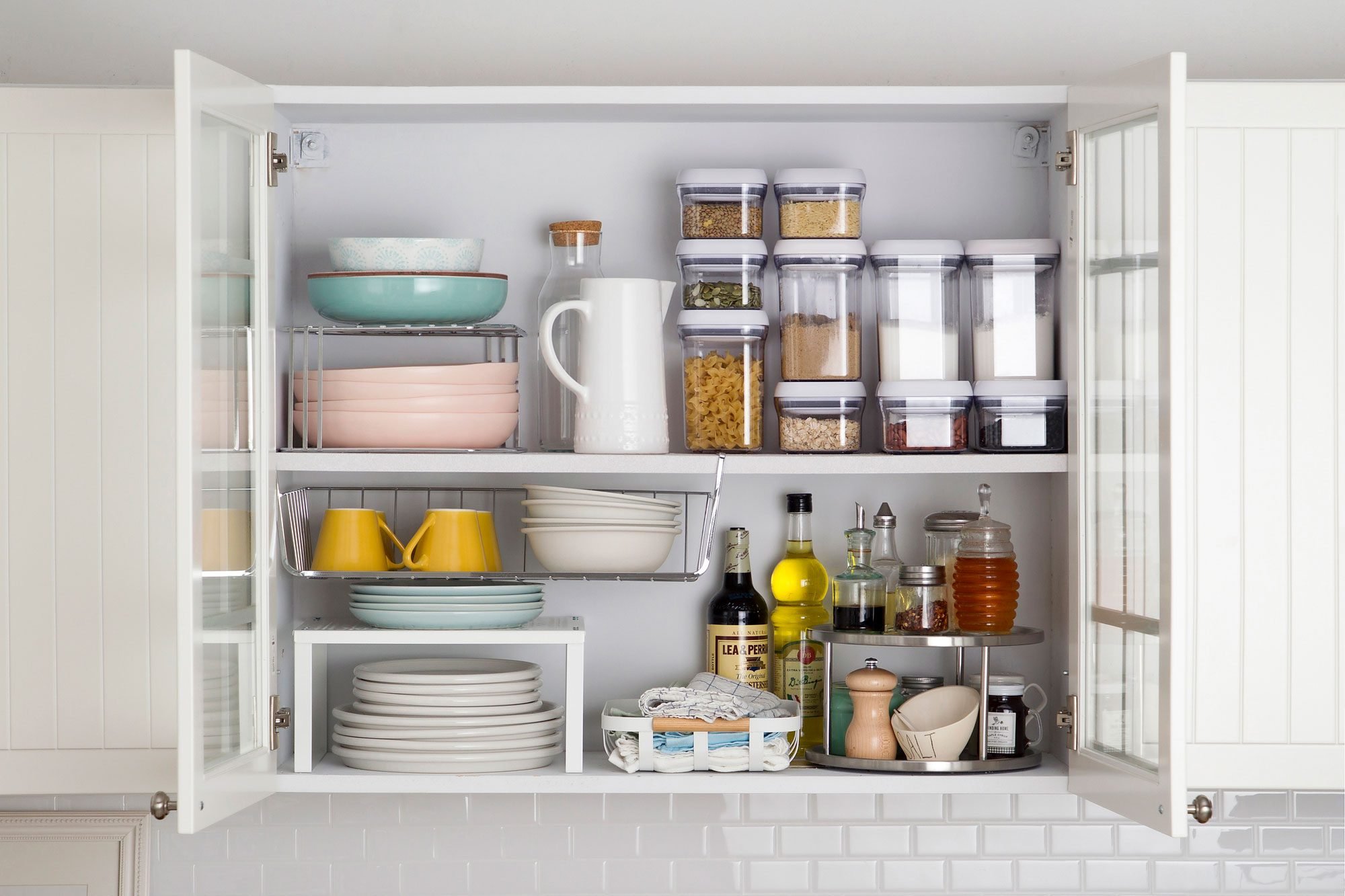
Credit: www.rd.com
Choosing Storage Solutions
Organize kitchen food cabinets by grouping similar items together. Use clear containers to keep everything visible and accessible. Utilize vertical space with stackable shelves or racks for maximum efficiency.
Choosing the right storage solutions can transform your kitchen cabinets. It keeps items accessible and makes cooking more efficient. By selecting the right bins, containers, and organizers, you create a functional space. Explore various options to suit your needs and style.Bins And Containers
Bins and containers help group similar items. They prevent clutter and make it easy to find what you need. Clear containers are ideal for dry goods like pasta and cereals. They let you see contents at a glance. Stackable bins maximize vertical space, perfect for smaller cabinets. Consider different sizes for different items.Labels And Organizers
Labels keep everything in order. They ensure each item has a designated spot. Use adhesive labels for jars and containers. This helps avoid confusion about contents. Drawer organizers are great for utensils and small gadgets. They prevent items from getting lost in clutter. Adjustable organizers adapt to your cabinet’s space.Space-saving Accessories
Space-saving accessories make use of every inch. Lazy Susans are perfect for corner cabinets. They provide easy access to items at the back. Shelf risers create extra levels in tall cabinets. This doubles the storage area. Door-mounted racks are perfect for spices and small bottles. They utilize often overlooked space effectively.Maintaining Organization
Organizing kitchen food cabinets creates a tidy space. Sort items by category to make finding them easier. Use clear containers to store dry goods and label everything clearly.
Maintaining organization in your kitchen food cabinets is crucial. It ensures easy access and prevents food waste. A well-organized cabinet saves time and energy. Follow these simple tips to keep your cabinets neat and tidy.Regular Inventory Checks
Conduct regular inventory checks to track your food supplies. Know what you have before shopping for more. This practice reduces unnecessary purchases and avoids clutter. Make a habit of checking expiration dates. Rotate older items to the front, and place new ones at the back. This helps in using food before it spoils.Seasonal Adjustments
Organize your cabinets according to seasons. Store seasonal foods where they are easily accessible. During summer, keep grilling spices and picnic supplies within reach. In winter, prioritize soups and baking ingredients. Adjusting your cabinet layout with the seasons ensures smooth meal planning.Cleaning And Upkeep
Clean your food cabinets regularly to maintain hygiene. Remove all items and wipe down shelves with a damp cloth. Use a mild cleaner for stubborn stains. Check for spills or leaks, and address them immediately. Regular cleaning prevents pests and keeps your kitchen smelling fresh. Dispose of expired or stale items to free up space.
Credit: www.hgtv.com
Expert Tips
Create zones for different food types in your kitchen cabinets. Use clear containers for easy visibility. Regularly check expiration dates to keep your food fresh.
Organizing kitchen food cabinets can transform your cooking experience. A well-arranged cabinet saves time and reduces stress. With expert tips, you can maximize space and keep your kitchen tidy.Professional Advice
Professionals suggest categorizing items. Group similar foods together, like canned goods or spices. Use clear containers for dry goods. This makes it easy to see what you have. Label shelves and containers to maintain order. Install shelf risers for extra storage. These create additional layers for stacking items. Use lazy Susans for easy access to jars and bottles.Common Mistakes To Avoid
Avoid overloading shelves. Too many items can lead to clutter and chaos. Keep heavier items on lower shelves for safety. Do not ignore expiration dates. Regularly check and rotate products to prevent waste. Avoid storing food in original packaging. Transfer to airtight containers to keep it fresh.Personalizing Your Space
Make your kitchen reflect your style. Choose containers and labels that match your decor. Use decorative baskets for snacks or bread. Add hooks or racks inside cabinet doors for utensils. This creates more space and adds a personal touch. Consider using chalkboard labels for a customizable option.Frequently Asked Questions
How Can I Maximize Cabinet Space Efficiently?
Maximize cabinet space by using adjustable shelves and organizing bins. Store items vertically to save space. Use clear containers for visibility. Label shelves for easy access. Regularly declutter and rearrange items to maintain efficiency.
What Are The Best Storage Solutions For Small Kitchens?
Use space-saving tools like stackable containers and pull-out organizers. Install hooks for utensils and mugs. Use door-mounted racks for spices. Optimize vertical space with shelves. Keep countertops clear to maintain a spacious feel.
How Do I Categorize Kitchen Items Effectively?
Categorize items by type and frequency of use. Group similar items like baking supplies together. Keep everyday items accessible. Use labeled bins for less-used items. Regularly review and adjust categories to improve efficiency.
How Often Should I Reorganize Kitchen Cabinets?
Reorganize cabinets every six months or as needed. Frequent decluttering prevents overcrowding. Regularly assess storage needs and adjust arrangements. Seasonal changes may require different storage strategies. Keep organization flexible for best results.
Conclusion
Organizing kitchen food cabinets can simplify your daily cooking routine. Clean and arrange items by category for easy access. Use clear bins to see what you have. Label shelves to keep everything in its place. Rotate older items to the front to avoid waste.
Consider adding shelf organizers to maximize space. Regularly review and declutter to maintain order. A tidy cabinet makes meal prep stress-free. Enjoy cooking with a well-organized kitchen.