
Have you ever stood in your kitchen, staring at your electric stove, and wondered if you could use your sleek induction cookware on it? You’re not alone.
This question sparks curiosity in many home cooks like you who want to make the most of their kitchen gadgets. After all, who wouldn’t want to whip up a delicious meal using the best tools at hand? Imagine the convenience of seamlessly transferring your induction pot from one cooking surface to another without any fuss.
But before you dive into experimenting, it’s crucial to understand the compatibility and potential benefits or drawbacks of using induction cookware on your electric stove. This article will unravel the mystery and provide you with insights that could transform your cooking experience. Keep reading to find out if your induction cookware can be the culinary ally you need on your electric stove.
Induction Cookware Basics
Induction cookware can be used on an electric stove, thanks to its versatility. Ensure the cookware’s base is flat and smooth for efficient heat transfer. This compatibility makes it a practical choice for many kitchens.
Induction cookware is specially designed for induction cooktops, but can it work on an electric stove? Understanding the basics of induction cookware will help clarify this question. Let’s explore the key aspects like material composition and magnetic properties to see if your induction cookware can serve multiple purposes.Material Composition
Induction cookware is typically made from stainless steel or cast iron. These materials are known for their durability and heat retention capabilities. You might even have noticed that these pots and pans feel heavier than their non-induction counterparts. The reason for this lies in their construction. Induction cookware often has multiple layers, including a magnetic layer which is crucial for induction cooking. However, this robust construction also makes them compatible with electric stoves.Magnetic Properties
The magic behind induction cooking is magnetism. Induction cookware must have a magnetic base to work on induction cooktops. This is why materials like aluminum and copper alone are not suitable unless they have a magnetic layer. But here’s the good news for electric stove users: the magnetic property does not hinder the cookware’s performance on electric stoves. In fact, the sturdy, flat bottom of induction cookware ensures even heat distribution on electric stoves. Have you ever tried using your induction cookware on an electric stove? You might find that it performs just as well, if not better, than your regular pots and pans. This can be a practical way to maximize your kitchen tools without needing a separate set for each stove type. So, if you own induction cookware and an electric stove, there’s a good chance you can use them together efficiently. Why not experiment with your next meal and see how it turns out?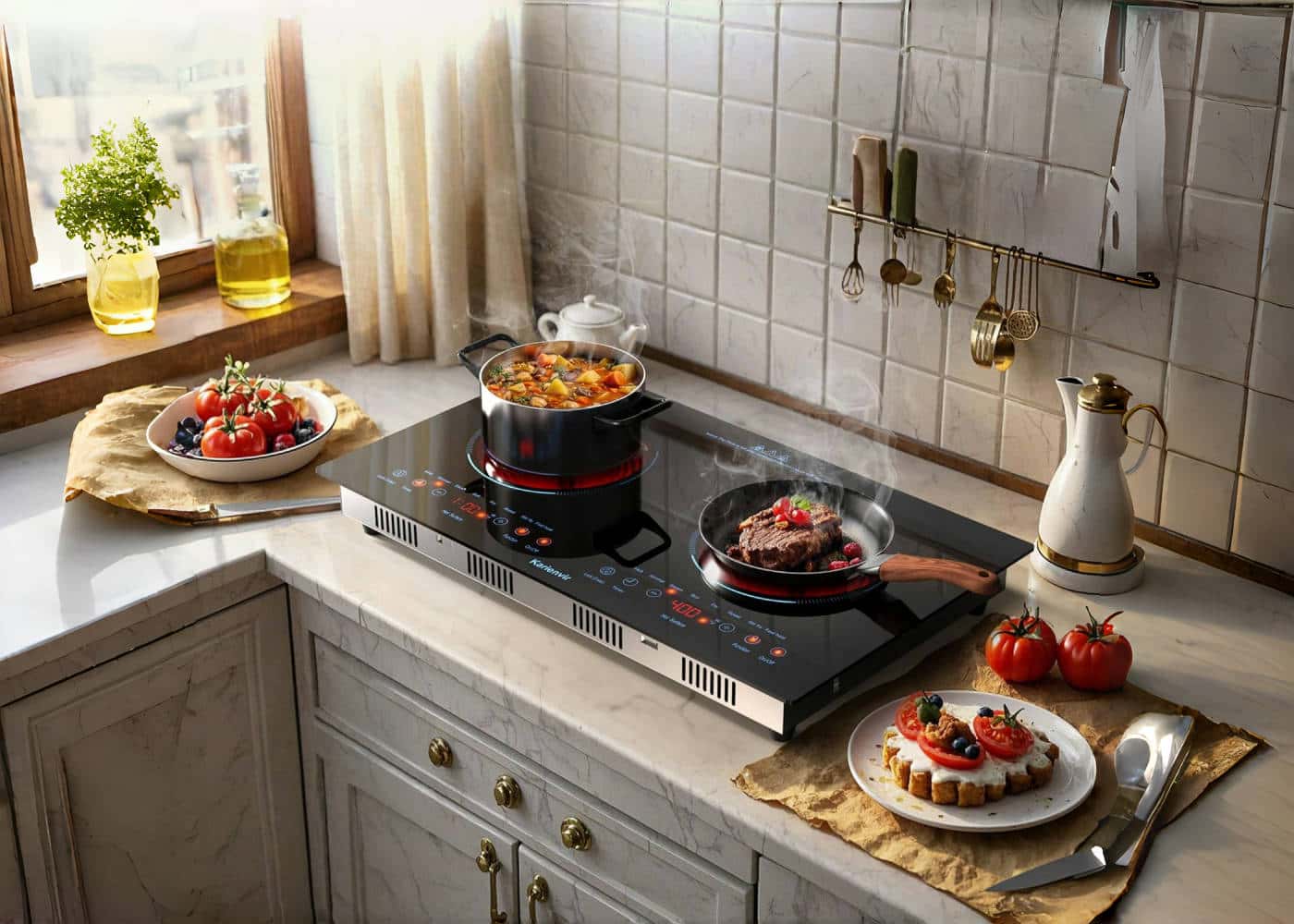
Credit: karinearappliances.com
Electric Stove Overview
Electric stoves have become a staple in modern kitchens, offering simplicity and reliability. They provide a clean and efficient way to cook, eliminating the need for open flames. But what kind of electric stove do you have, and how does it heat your cookware?
Types Of Electric Stoves
There are primarily two types of electric stoves: coil and smooth top stoves. Coil stoves feature visible heating elements that resemble coils, while smooth top stoves have a flat surface with hidden heating elements beneath a glass-ceramic top. Each type has its own benefits.
- Coil stoves are often more affordable and durable, making them a popular choice for budget-conscious households.
- Smooth top stoves provide a sleek appearance and are easier to clean, but they require careful handling to avoid scratches.
Heating Mechanism
The heating mechanism in electric stoves is straightforward. They convert electrical energy into heat through their heating elements. But how does this affect your cooking experience?
In coil stoves, the coils directly heat the cookware, which can result in uneven heating if the pot doesn’t sit flat. Smooth top stoves, on the other hand, distribute heat more evenly across the surface, ensuring uniform cooking.
Think about your cooking style and needs. Do you prefer quick and intense heat or a gentle and even distribution? This can influence which type of stove you find more appealing.
So, when considering if induction cookware is suitable for your electric stove, understanding these nuances can help you make an informed decision.
Compatibility Factors
When transitioning from an induction cooktop to an electric stove, one pressing concern is whether your existing induction cookware will work seamlessly. The compatibility between cookware and stovetops hinges on several factors. Let’s explore the critical aspects that determine whether your induction pots and pans can effectively function on an electric stove.
Cookware Design
The design of your cookware plays a pivotal role in compatibility. Induction cookware is typically crafted with a ferromagnetic base that directly interacts with the magnetic field of induction cooktops. However, this design also makes it versatile enough to work on electric stoves.
It’s essential to ensure the base is flat and smooth. A flat base maximizes contact with the heating element on an electric stove, promoting efficient heat transfer. Have you ever noticed uneven cooking? It could be due to a warped or textured base, hindering heat distribution.
Heat Distribution
Heat distribution is another crucial factor. Induction cookware is often designed for rapid and even heat dispersion, which can be advantageous on electric stoves. The even heat helps in cooking food uniformly, reducing the chances of hot spots.
However, the way heat is distributed might differ slightly between induction and electric stoves. On electric stoves, heat is transferred through direct contact, so ensuring your cookware is of good quality and maintains a consistent temperature is vital. This ensures your dishes come out perfectly cooked every time.
Have you tried using induction cookware on an electric stove? Share your experience and see how it measures up in terms of design and heat distribution!
Safety Considerations
Using induction cookware on an electric stove raises safety concerns. Understanding these can prevent accidents and ensure a pleasant cooking experience.
Potential Risks
Induction cookware often has a magnetic base. This feature may not align with electric stoves. Misalignment can lead to uneven cooking. Metal handles on cookware may heat up more on electric stoves. This poses a burn risk. Always use oven mitts to handle hot cookware.
Safe Usage Tips
- Ensure the cookware’s base covers the burner entirely.
- Monitor the cookware’s heat level to avoid overheating.
- Use cookware with flat bottoms for even contact.
- Keep flammable items away from the stove.
- Regularly check for damage on cookware and stove surface.
Performance Differences
Induction cookware works well on electric stoves, offering efficient heat transfer. Compatible materials like stainless steel ensure optimal performance. Check for flat-bottomed cookware to ensure even heat distribution and avoid energy loss.
The performance differences between induction cookware and electric stoves can be significant. Understanding these differences helps in choosing the best cookware for your needs. Induction cookware is designed for efficiency and precision. Meanwhile, electric stoves work differently and may affect cooking results.Cooking Efficiency
Induction cookware heats quickly. This is because it uses magnetic fields to generate heat directly in the pan. Electric stoves rely on heating elements, which can be slower. Induction cookware offers precise temperature control. This results in consistent cooking. Electric stoves may have uneven heat distribution. This can lead to hotspots and uneven cooking.Energy Consumption
Induction cookware is energy-efficient. It uses less power by heating only the pan, not the air around it. Electric stoves consume more energy. They heat the burner and the surrounding air. Induction saves energy and reduces cooking time. Electric stoves may take longer to cook food, using more energy.User Experiences
Many cooks wonder if induction cookware works on electric stoves. Users have shared their experiences, revealing both challenges and successes. This insight helps others make informed choices.
Common Challenges
Some users face difficulties using induction cookware on electric stoves. A frequent issue is uneven heating. Electric stoves heat differently than induction cooktops. This can lead to hot spots or slow cooking. Another challenge is cookware compatibility. Not all induction cookware works well on electric stoves. This is due to the flat surface contact needed for even heat distribution. Users often find that heavier pans perform better. Lightweight pans may not sit evenly on the stove. This can cause wobbling and uneven cooking. Stains and scratches are also common. Electric stoves can leave marks on induction cookware, affecting appearance.
Success Stories
Despite challenges, many users report success using induction cookware on electric stoves. They share tips for better results. Choosing the right cookware is crucial. Heavy-bottomed pans often yield better results. These pans distribute heat evenly. Users recommend using cookware with a flat, wide base. This ensures full contact with the stove surface. Some have found success with tri-ply or multi-layered pans. These pans offer improved heat conduction. Patience is key, as electric stoves heat slower than induction. Adjusting cooking techniques can lead to satisfying results.
Expert Recommendations
Using induction cookware on an electric stove can be efficient. Experts suggest choosing the right cookware and following best practices for optimal results. Understanding these recommendations ensures safety and enhances cooking performance.
Choosing The Right Cookware
For electric stoves, experts recommend stainless steel or cast iron cookware. These materials conduct heat effectively and distribute it evenly. Avoid using cookware with warped bottoms. Flat surfaces provide better contact with the stove, improving heat transfer. Consider the size of the cookware. It should match the burner size to maximize efficiency.
Best Practices For Use
Ensure the cookware is clean and dry before use. Residue can affect heat distribution. Adjust the heat settings according to the dish being prepared. Start with medium heat to prevent overheating. Use lids to retain heat and speed up cooking. Regularly monitor the cooking process. This prevents overcooking and ensures safety. After use, allow the cookware to cool down gradually. Sudden temperature changes can damage the cookware.

Credit: circulon.uk.com

Credit: www.facebook.com
Frequently Asked Questions
Can Induction Cookware Work On Electric Stoves?
Yes, induction cookware can be used on electric stoves. It is typically made of magnetic materials. This allows it to effectively conduct heat on both induction and electric cooktops. Ensure the cookware has a flat bottom for optimal heat distribution on electric stoves.
What Is Induction Cookware Made Of?
Induction cookware is made of magnetic materials like cast iron or stainless steel. This composition allows it to work with induction cooktops. The magnetic properties of these materials enable efficient heat conduction on both induction and electric stoves.
Are There Benefits Of Using Induction Cookware On Electric Stoves?
Yes, using induction cookware on electric stoves offers benefits. It provides efficient heat distribution, ensuring even cooking. The magnetic materials enhance heat conduction. This makes cooking faster and energy-efficient compared to non-magnetic cookware.
Is Induction Cookware Compatible With All Electric Stoves?
Induction cookware is generally compatible with all electric stoves. Ensure the cookware has a flat bottom for best results. Flat surfaces ensure optimal contact with the stove, promoting even heat distribution and efficient cooking.
Conclusion
Induction cookware works well on electric stoves. These pots and pans are versatile. They conduct heat efficiently. Make sure the cookware is flat-bottomed. This ensures even heating. Compatibility is key for optimal cooking. Always check for a magnetic base. This guarantees better performance.
Investing in quality cookware pays off. It enhances your cooking experience. Safety is also improved with good cookware. It minimizes risks of damage. Choose wisely to enjoy your meals. Proper cookware makes cooking easier. An electric stove can handle many types.
Induction cookware is a reliable choice. Explore options for your kitchen needs.